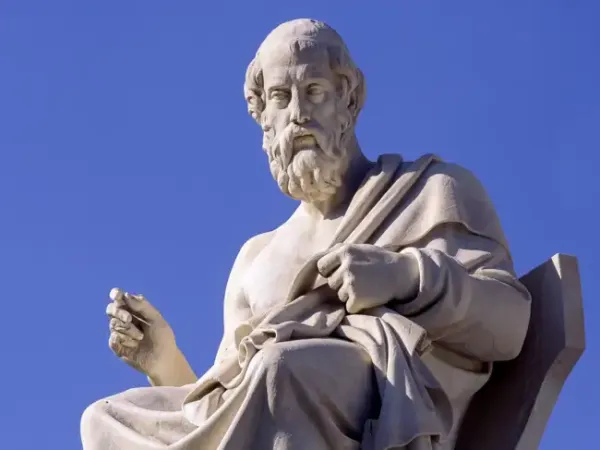
Quote of the Day by Plato: 'No one is more hated than he who speaks the truth' is a famous quote by Plato, an Athenian philosopher who was a student of Socrates and the teacher of Aristotle. The quote by Plato means that people often do not like hearing the truth, especially when it is uncomfortable or when it goes against what their pre-conceived notion.
ALSO READ: Petrol, Diesel price today (March 25)
According to Plato's quote, when people speak the truth, it can expose other people's mistakes, wrong actions, intentions, or realities that others may find it tough to accept. Rather than accepting the truth, people may react with anger or rejection toward the person who is speaking it. This reaction is not necessarily because the truth is wrong, but because it is out of their comfort zone. When someone speaks the truth, it can challenge beliefs, opinions, and behaviors that people are emotionally attached to.
ALSO READ: Which day of Chaitra Navratri is today?
ALSO READ: MP Class 5 Results 2026 link & Time
Society sometimes prefers harmony over honesty, and people may avoid speaking the truth to maintain peace or avoid conflict. This is also one of the main reasons why people who are honest are sometimes misunderstood or labeled negatively, even when their intentions are genuine.
The quote also teaches us that speaking the truth takes courage. A truthful person may have to face opposition or stand alone, but they choose honesty over pleasing others. They do not try to please everyone and may not be in everyone's good books. While truth may not always be appreciated in the moment, it is important for learning, improvement, and solving problems. Without truth, problems remain hidden and unresolved.
Plato’s quote reminds us that honesty is not always appreciated, especially when it challenges people’s comfort or beliefs. However, truth remains essential for progress and authenticity. Those who speak the truth may not always be liked, but they contribute to a more honest and transparent world. Plato's quote means that honesty is not always welcomed, but it is valuable and necessary, even if it sometimes makes people uncomfortable.
“A good decision is based on knowledge and not on numbers.”
“Wise men speak because they have something to say; fools because they have to say something.”
“The first and greatest victory is to conquer yourself.”
“Knowledge without justice ought to be called cunning rather than wisdom.”
“Books give a soul to the universe, wings to the mind, flight to the imagination, and life to everything.”
“The measure of a man is what he does with power.”
“Opinion is the medium between knowledge and ignorance.”
“Do not train a child to learn by force or harshness.”
“False words are not only evil in themselves, but they infect the soul with evil.”
“Necessity is the mother of invention.”
“No one is more hated than he who speaks the truth.”
ALSO READ: Petrol, Diesel price today (March 25)
According to Plato's quote, when people speak the truth, it can expose other people's mistakes, wrong actions, intentions, or realities that others may find it tough to accept. Rather than accepting the truth, people may react with anger or rejection toward the person who is speaking it. This reaction is not necessarily because the truth is wrong, but because it is out of their comfort zone. When someone speaks the truth, it can challenge beliefs, opinions, and behaviors that people are emotionally attached to.
ALSO READ: Which day of Chaitra Navratri is today?
Meaning of Plato's quote
Plato, whose study on philosophy and the nature of human beings has been spread far and wide, tries to deliver a strong and powerful message through his quote. In simple terms, the quote also shows that people usually prefer hearing things that make them feel good rather than things that challenge them or make them uncomfortable. Because of this, a person who is honest and speaks the truth may not always be popular or liked by everyone. Even if their intention is good, others may still criticize or reject them.ALSO READ: MP Class 5 Results 2026 link & Time
Society sometimes prefers harmony over honesty, and people may avoid speaking the truth to maintain peace or avoid conflict. This is also one of the main reasons why people who are honest are sometimes misunderstood or labeled negatively, even when their intentions are genuine.
The quote also teaches us that speaking the truth takes courage. A truthful person may have to face opposition or stand alone, but they choose honesty over pleasing others. They do not try to please everyone and may not be in everyone's good books. While truth may not always be appreciated in the moment, it is important for learning, improvement, and solving problems. Without truth, problems remain hidden and unresolved.
Plato’s quote reminds us that honesty is not always appreciated, especially when it challenges people’s comfort or beliefs. However, truth remains essential for progress and authenticity. Those who speak the truth may not always be liked, but they contribute to a more honest and transparent world. Plato's quote means that honesty is not always welcomed, but it is valuable and necessary, even if it sometimes makes people uncomfortable.
Other Plato's quotes
“We can easily forgive a child who is afraid of the dark; the real tragedy of life is when men are afraid of the light.”“A good decision is based on knowledge and not on numbers.”
“Wise men speak because they have something to say; fools because they have to say something.”
“The first and greatest victory is to conquer yourself.”
“Knowledge without justice ought to be called cunning rather than wisdom.”
“Books give a soul to the universe, wings to the mind, flight to the imagination, and life to everything.”
“The measure of a man is what he does with power.”
“Opinion is the medium between knowledge and ignorance.”
“Do not train a child to learn by force or harshness.”
“False words are not only evil in themselves, but they infect the soul with evil.”
“Necessity is the mother of invention.”
“No one is more hated than he who speaks the truth.”