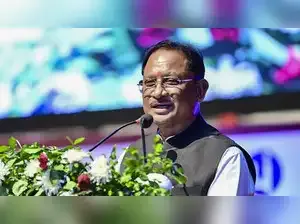
New Delhi: Chhattisgarh CM Vishnu Deo Sai, during his visit to Delhi on Thursday, pitched for converting underutilised or inactive paramilitary and police camps in tribal areas into 'Seva Kendras' offering a bouquet of government services.
In a presentation made before Union home minister Amit Shah, Sai stressed that the initiative is aimed at improving access to government services in tribal and remote areas which, until recently, were inaccessible due to LWE activities in the region. Now that the government has announced the region as Maoist-free, many camps set up by CAPF and state police forces during anti-Maoist operations are seeing limited operational use as the security situation has improved in several areas. A concept note has been prepared to repurpose this infrastructure for development and welfare activities.
In the first phase, low-usage camps will be identified, with priority being given based on distance, security and local requirements. Basic repairs, internet connectivity, electricity and water supply will then be arranged before departmental services are integrated. The proposal focuses on remote villages where access to administrative offices, banking, healthcare and digital services remains limited. Officials believe the move can help bring government schemes closer to people without creating entirely new infrastructure. The centres are expected to act as one-stop hubs for government services. These would include Aadhaar update facilities, applications for caste and income certificates, Ayushman Bharat cards, ration card services, electricity bill payments and banking services. The proposal also includes online form submissions, railway and bus ticket bookings, and digital services such as printing and scanning.
Health and nutrition services are also part of the plan. Primary healthcare, vaccination, maternal and child healthcare services, nutrition programmes and malaria control activities may be carried out through these centres. The government has also proposed skill development training, employment guidance for youth, agricultural advisory services and support for farmers through the centres.
In a presentation made before Union home minister Amit Shah, Sai stressed that the initiative is aimed at improving access to government services in tribal and remote areas which, until recently, were inaccessible due to LWE activities in the region. Now that the government has announced the region as Maoist-free, many camps set up by CAPF and state police forces during anti-Maoist operations are seeing limited operational use as the security situation has improved in several areas. A concept note has been prepared to repurpose this infrastructure for development and welfare activities.
In the first phase, low-usage camps will be identified, with priority being given based on distance, security and local requirements. Basic repairs, internet connectivity, electricity and water supply will then be arranged before departmental services are integrated. The proposal focuses on remote villages where access to administrative offices, banking, healthcare and digital services remains limited. Officials believe the move can help bring government schemes closer to people without creating entirely new infrastructure. The centres are expected to act as one-stop hubs for government services. These would include Aadhaar update facilities, applications for caste and income certificates, Ayushman Bharat cards, ration card services, electricity bill payments and banking services. The proposal also includes online form submissions, railway and bus ticket bookings, and digital services such as printing and scanning.
Health and nutrition services are also part of the plan. Primary healthcare, vaccination, maternal and child healthcare services, nutrition programmes and malaria control activities may be carried out through these centres. The government has also proposed skill development training, employment guidance for youth, agricultural advisory services and support for farmers through the centres.