We often celebrate human intelligence, our inventions, our cities, our technologies, and our ability to reshape the planet. But what if the very brilliance that lifted us to the top of Earth’s food chain is also putting our survival at risk? What if intelligence without restraint is not progress, but peril?
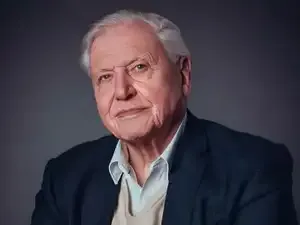
Few voices have warned the world about this more gently, persistently, and credibly than David Attenborough.
Sir David Attenborough, born in 1926 in England, is a natural historian, broadcaster, and filmmaker whose career with the BBC spans over seven decades. Trained in zoology and geology at the University of Cambridge, he brought scientific depth to television storytelling.
As a pioneer at BBC Two and later Director of Programmes for BBC Television, he helped shape modern factual broadcasting before dedicating himself fully to natural history filmmaking.
Through landmark series such as Life on Earth, The Blue Planet, and Planet Earth, Attenborough transformed how humanity sees wildlife and the environment. His calm narration, field presence, and insistence on scientific accuracy made nature documentaries globally influential.
In later years, his work evolved from celebration of biodiversity to urgent environmental advocacy, especially around climate change, habitat loss, and extinction.
“We have come as far as we have because we are the cleverest creatures to have ever lived on Earth. But if we are to continue to exist, we will require more than intelligence. We will require wisdom.”
– A Life on Our Planet: My Witness Statement and a Vision for the Future
Attenborough draws a crucial distinction between intelligence and wisdom. Intelligence helped humans build machines, extract resources, and dominate ecosystems. It enabled progress, comfort, and technological marvels.
But wisdom asks a different question: Should we?
Wisdom is the ability to foresee consequences, to respect limits, and to act with responsibility toward the planet and future generations.
Intelligence built the modern world; wisdom must now save it.
Intelligence drove fossil fuel consumption that increased atmospheric carbon dioxide to levels not seen in millions of years, with concentrations rising above 428 parts per million by July 2025, intensifying the greenhouse effect.
Research confirms that the years 2023–2025 were among the three warmest on record, with global temperatures averaging more than 1.5°C above pre-industrial levels.
Few voices have warned the world about this more gently, persistently, and credibly than David Attenborough.
David Attenborough
Sir David Attenborough, born in 1926 in England, is a natural historian, broadcaster, and filmmaker whose career with the BBC spans over seven decades. Trained in zoology and geology at the University of Cambridge, he brought scientific depth to television storytelling.
As a pioneer at BBC Two and later Director of Programmes for BBC Television, he helped shape modern factual broadcasting before dedicating himself fully to natural history filmmaking.
Through landmark series such as Life on Earth, The Blue Planet, and Planet Earth, Attenborough transformed how humanity sees wildlife and the environment. His calm narration, field presence, and insistence on scientific accuracy made nature documentaries globally influential.
In later years, his work evolved from celebration of biodiversity to urgent environmental advocacy, especially around climate change, habitat loss, and extinction.
Quote of the day
“We have come as far as we have because we are the cleverest creatures to have ever lived on Earth. But if we are to continue to exist, we will require more than intelligence. We will require wisdom.”
– A Life on Our Planet: My Witness Statement and a Vision for the Future
What this quote means
Attenborough draws a crucial distinction between intelligence and wisdom. Intelligence helped humans build machines, extract resources, and dominate ecosystems. It enabled progress, comfort, and technological marvels.
But wisdom asks a different question: Should we?
Wisdom is the ability to foresee consequences, to respect limits, and to act with responsibility toward the planet and future generations.
Intelligence built the modern world; wisdom must now save it.
Intelligence drove fossil fuel consumption that increased atmospheric carbon dioxide to levels not seen in millions of years, with concentrations rising above 428 parts per million by July 2025, intensifying the greenhouse effect.
Research confirms that the years 2023–2025 were among the three warmest on record, with global temperatures averaging more than 1.5°C above pre-industrial levels.
More quotes by Sir David Attenborough
- “An understanding of the natural world is a source of not only great curiosity, but great fulfilment.”
- “The truth is: the natural world is changing. And we are totally dependent on that world.”
- “Saving our planet is now a communications challenge.”
- “People must feel that the natural world is important and valuable and beautiful and wonderful and an amazement and a pleasure.”