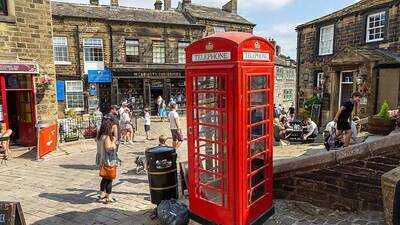
Across England, some of the most memorable town centres are found far from major cities. Their appeal rarely comes from large attractions alone. Instead, it is often the combination of old buildings, centuries-old market traditions, narrow lanes, independent businesses and the steady pace of local life that leaves a lasting impression.
Many of these towns have evolved gradually over hundreds of years, which explains why their streets feel layered rather than planned. A medieval church may stand beside Georgian shopfronts, while a centuries-old pub still serves customers a short walk from a modern gallery. Some sit beside rivers, others overlook harbours or rolling countryside, yet each has a main street that remains central to daily life. From royal Windsor to tiny Castle Combe , these places offer a glimpse into different chapters of England’s past without feeling frozen in time.
According to here’s the list of 8 English towns with unforgettable main streets.
England’s prettiest towns: 8 places with unforgettable main streets
1. Windsor
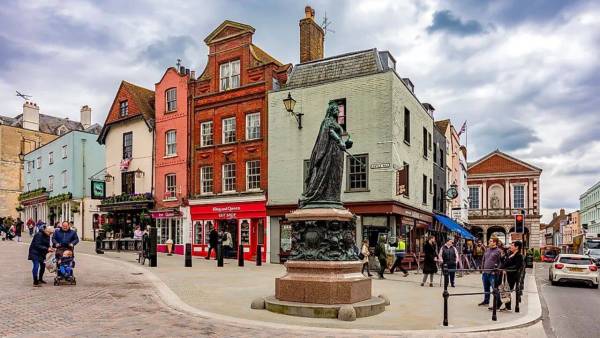
Situated in Berkshire, Windsor is inseparable from the presence of Windsor Castle. The castle dominates both the skyline and the town’s identity, having served generations of British monarchs. Visitors often arrive for the royal landmark but end up spending just as much time wandering the surrounding streets.
The High Street remains one of the town's busiest areas, lined with shops, cafés and traditional pubs housed within historic buildings. Architectural details from different eras sit comfortably beside one another, creating a streetscape that reflects centuries of change. A short distance away, Windsor Great Park provides a very different setting, with extensive parkland, woodland paths and open spaces that contrast with the bustle of the town centre.
2. Whitby
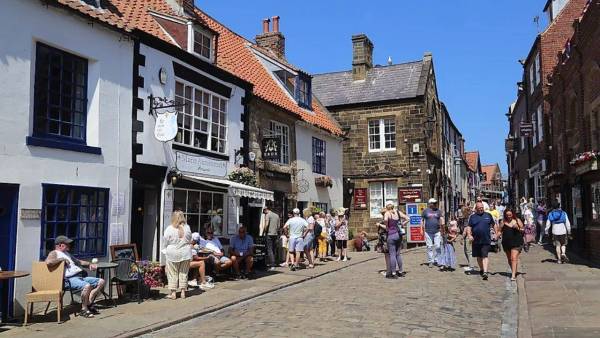
Perched on the North Yorkshire coast, Whitby has long been shaped by the sea. Its harbour remains active, and many of the narrow streets around the waterfront still follow routes established generations ago. Weathered rooftops, old fishermen’s cottages and tightly packed buildings give the town a distinctive appearance that has changed surprisingly little.
The town also shares an enduring connection with explorer Captain James Cook, who spent part of his early life here. Visitors can learn about that history at the Captain Cook Memorial Museum, located in a house associated with his apprenticeship years. Above the town stand the ruins of Whitby Abbey, a site whose origins stretch back to the seventh century and which remains one of the area's most recognisable landmarks.
3. Wells
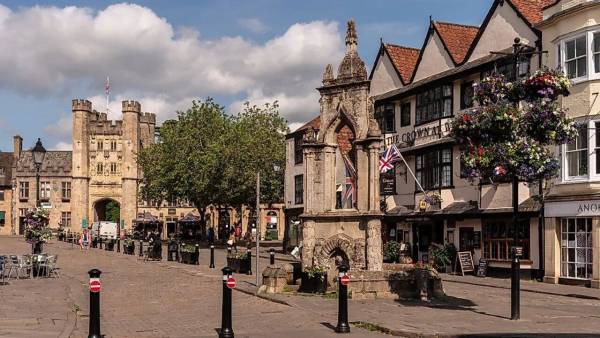
Although it is one of England’s smallest cities, Wells retains the atmosphere of a traditional market town. Much of its historic character survives in the streets around the cathedral precinct, where medieval buildings continue to shape the town centre.
At the heart of Wells stands Wells Cathedral, widely admired for its Gothic architecture and remarkable stonework. Nearby sits The Bishop's Palace, surrounded by gardens and a moat. One of the town’s most unusual traditions involves the palace swans, which have become well known for ringing a bell when feeding time approaches.
A short walk away lies Vicars' Close. Built during the 14th century, it remains one of the best-preserved medieval residential streets anywhere in Europe, offering a rare glimpse into urban life from centuries ago.
4. St Ives
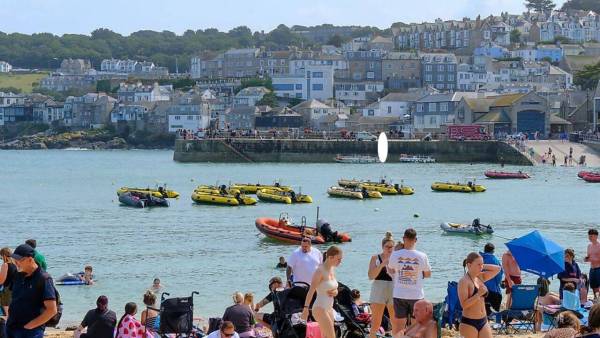
On Cornwall’s Atlantic-facing coastline, St Ives combines a working harbour, sandy beaches and a thriving artistic heritage. The centre of town revolves around a network of streets filled with independent shops, galleries and small cafés, many tucked into historic buildings.
Art has played a significant role in shaping St Ives for decades. The town is home to Tate St Ives, which showcases modern and contemporary works connected to the region. Nearby, the Barbara Hepworth Museum and Sculpture Garden preserves the workspace of the influential sculptor and offers insight into her creative life.
Just beyond the town centre lies Porthmeor Beach, a broad stretch of sand that attracts surfers, swimmers and walkers throughout much of the year.
5. Warwick
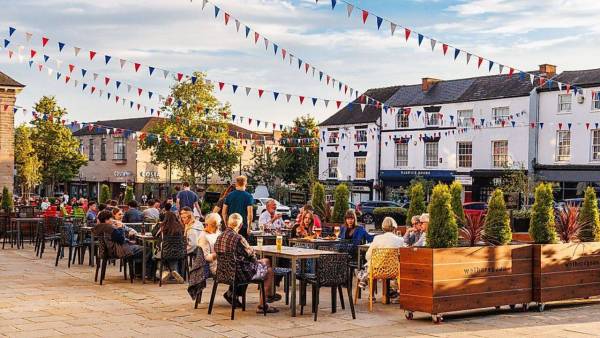
The county town of Warwickshire, Warwick, possesses a High Street where historic buildings remain an everyday part of the town's commercial life. Independent businesses, restaurants and cafés occupy structures that often date back several centuries.
One of the most distinctive landmarks is Lord Leycester Hospital, a collection of medieval timber-framed buildings that continues to attract visitors interested in local history. Nearby, the River Avon adds another dimension to the town, with opportunities to explore the water by boat.
Towering above much of Warwick is Warwick Castle . Its long history stretches back nearly a thousand years, and the fortress remains one of the country's best-known medieval sites.
6. Knaresborough
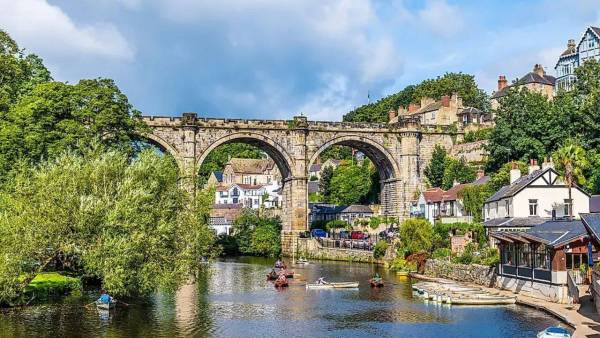
Built along steep slopes above the River Nidd, Knaresborough occupies one of the most dramatic settings of any English market town. The landscape is impossible to ignore; riverside views appear at almost every turn.
The historic marketplace remains a focal point, surrounded by old inns, independent businesses and rows of Georgian buildings. Just beyond it stands Knaresborough Castle, whose remains overlook the river valley below.
Many visitors spend as much time walking as shopping. Paths follow the river through the gorge, while the striking Knaresborough Viaduct offers broad views across the surrounding countryside and townscape.
7. Haworth
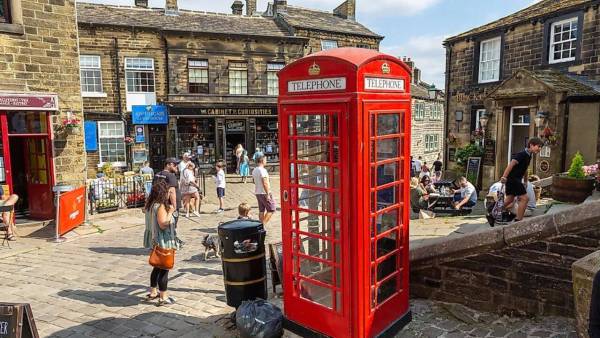
Nestled within West Yorkshire’s Worth Valley, Haworth is closely associated with the literary legacy of the Brontë sisters. Their novels remain deeply linked to the surrounding moorland landscapes and the village where much of their lives unfolded.
The steep main street climbs through the centre of Haworth, passing stone-built shops, tearooms and historic buildings. The atmosphere feels distinctly different from larger market towns, with much of the village retaining its nineteenth-century appearance.
Literary visitors often head to the Brontë Parsonage Museum, housed within the family’s former home. Nearby, St Michael and All Angels Church remains an important part of the village’s history and contains the Brontë family vault.
8. Castle Combe
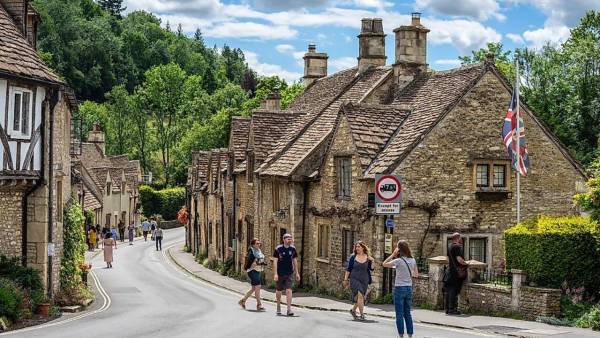
Deep within the Cotswolds, Castle Combe is often recognised for the remarkable preservation of its historic streetscape. Unlike many towns that have expanded significantly over time, Castle Combe remains relatively small, allowing much of its original character to survive.
Its main thoroughfare, known simply as "The Street", passes rows of honey-coloured stone cottages typical of the region. An old market cross and historic water pump still occupy prominent positions in the village centre, reinforcing the sense of continuity with earlier centuries.
The village has appeared in numerous film and television productions, partly because so little modern development intrudes upon the setting. Visitors can also stop at St Andrew's Church, where the medieval clock remains one of the community’s most enduring landmarks.
Contact to : xlf550402@gmail.com
Copyright © boyuanhulian 2020 - 2023. All Right Reserved.