
When Steve Jobs said, "Coming back to America was, for me, much more of a cultural shock than going to India," he wasn't talking about cultural attractions, UNESCO monuments or tiger reserves. He made this remark years after his life-changing trip to India and he was describing how travel can quietly rewrite the way we see the world and our own selves. For travellers, sometimes the biggest surprise isn't the destination but the moment they return home and realise the change in themselves.
When a 19-year-old Steve Jobs travels to India
Steve Jobs was just 19 in 1974 when he travelled all the way from the United States to India. Just out of college, Jobs wasn't looking for a holiday but he was in search of spirituality. During his quest, he reached Nainital, Uttarakhand in the ashram of Neem Karoli Baba in Kainchi Dham.
However, by the time Jobs arrived, the revered Hindu mystic had already left Earth. But Jobs continued travelling across northern India and explored hidden villages, ancient temples, and many ashrams. He was just trying to understand a culture which was completely different from what he had known since childhood. His India sojourn lasted several months and exposed him to India's stunning contrasts.
An experience that changed his life
And his perspective. Years later, Jobs founded one of the most successful companies. He said that India taught him to appreciate intuition in a way Western culture often overlooked. He observed that many people he met seemed to trust instinct more than analytical thinking.
And that lesson would later become part of his design philosophy. Former colleagues often described Jobs as someone who relied heavily on intuition while making important decisions.
Reverse culture shock
"Coming back to America was, for me, much more of a cultural shock than going to India."
For many travellers, this feeling is reverse culture shock. Why would coming home feel stranger than leaving? So for those who don’t know, reverse culture shock happens when returning travellers struggle to reconnect with their regular routines and values or pace of life they once considered normal.
What travel psychologists say
Travel psychologists have long noted that immersive journeys can reshape daily habits. A traveller who spends months in another culture often returns with a new appreciation for simplicity, spirituality, food, community or work-life balance, among others.
Jobs' words capture this perfectly. India itself wasn't the greatest surprise. Realising how much he had changed after returning home was.
Not just Jobs but a number of global figures are drawn to India in search of spirituality. For decades, travellers have visited India for yoga, meditation, and spiritual learning. Places such as Rishikesh, Varanasi, Bodh Gaya, Dharamshala and Auroville continue to attract visitors.
Influence of Kainchi Dham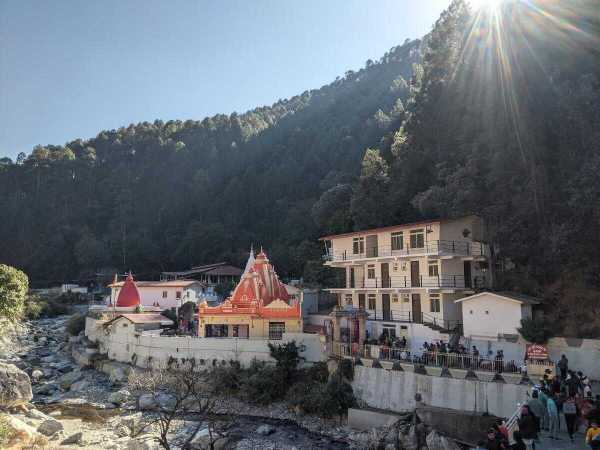
Kainchi Dham still welcomes thousands of visitors seeking Neem Karoli Baba. The temple gained renewed international attention after international names like Steve Jobs and Mark Zuckerberg publicly acknowledged its influence on their lives.
In short, sometimes the journeys that teach us the most are also the least comfortable. For travellers today, his experience offers a reminder that the true value of a journey cannot always be measured in kilometres travelled or photographs taken.
Sometimes, the destination changes you so profoundly that home no longer feels exactly the same. Perhaps that's one of travel's greatest gifts. The world may remain exactly where it is—but after a truly meaningful journey, the person returning home is no longer quite the same.
Contact to : xlf550402@gmail.com
Copyright © boyuanhulian 2020 - 2023. All Right Reserved.