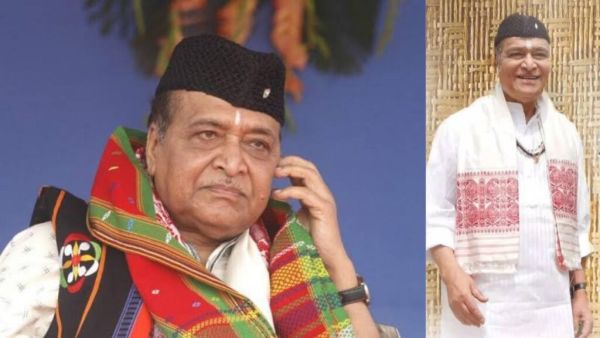
New Delhi: India is remembering one of its greatest cultural icons, Dr Bhupen Hazarika, on his 100th birth anniversary, celebrating the extraordinary journey of a man whose voice became the heartbeat of Assam and the soul of the Northeast.
Prime Minister Narendra Modi paid tribute to the legendary artiste, recalling how Hazarika's music carried the spirit, struggles and aspirations of countless people across India. His songs did not merely entertain audiences; they became a bridge between communities, languages and generations, transforming music into a movement of social awareness and emotional connection.
Known as the “Bard of the Brahmaputra”, Bhupen Hazarika's legacy extends far beyond the world of music. Through his compositions, cinema and poetry, he gave expression to the dreams of ordinary people and placed the cultural identity of Assam prominently on the national stage.
A Voice That Carried The Soul Of Assam
Born on September 8, 1926, in Sadiya, Assam, Bhupen Hazarika emerged as one of the most influential cultural figures of modern India. His powerful voice carried the fragrance of the Brahmaputra valley, reflecting the lives of farmers, workers, communities and people struggling for dignity and equality. His music was deeply rooted in Assamese folk traditions while carrying universal messages of humanity, compassion and brotherhood.
Prime Minister Narendra Modi, while remembering the legendary artiste on his centenary, highlighted that Hazarika gave voice to the thoughts and emotions of millions through his music. His songs connected people across geographical boundaries and created a cultural dialogue that continues to inspire generations.
From Assam's Folk Roots To India's Cultural Identity
Bhupen Hazarika's artistic journey represented the rise of regional culture onto the national platform. At a time when folk traditions often remained confined to local communities, Hazarika introduced Assam's rich musical heritage to audiences across India. His compositions blended traditional Assamese sounds with modern storytelling, creating a unique musical language that appealed to people across regions.
Songs like Bistirno Parore, Manuhe Manuhor Babey, Moi Eti Jajabor and Buku Hom Hom Kore remain timeless reflections of humanity, social responsibility and emotional depth. His music questioned inequality, celebrated human relationships and encouraged society to look beyond divisions.
A Childhood Talent That Became A National Legacy
Hazarika's association with music began at an extraordinary age. As a young child in Tezpur, his talent was recognized by legendary cultural personalities Jyotiprasad Agarwala and Bishnu Prasad Rabha.
At just 12 years old, he lent his voice to two songs in Agarwala's film Indramalati, marking the beginning of a remarkable artistic journey. Over the decades, he became a multi-dimensional personality, from a singer to composer, lyricist, filmmaker, scholar and social thinker whose influence shaped Assam's cultural landscape.
Education, Global Exposure and The Making of a Cultural Revolutionary
Hazarika's journey was not limited to music alone. He pursued higher education in Political Science at Banaras Hindu University before traveling to the United States on a scholarship to Columbia University, where he completed his doctorate in 1952.
During his stay in America, he interacted with renowned civil rights activist and musician Paul Robeson. The experience deeply influenced his understanding of music as a tool for social transformation.
The impact of this association reflected in his iconic song Bistirno Parore, which carried themes of human struggle and collective responsibility. For Hazarika, music was never just an art form. It was a medium to speak for society, highlight injustice and bring people closer.
Cinema, Literature and A Legacy Beyond Music
After returning to India, Bhupen Hazarika became associated with the Indian People's Theater Association and established himself as a major cultural force in Assam, Bengal and Hindi cinema.
He composed music for several films and contributed significantly to Indian cinema through his storytelling and musical vision. His creative journey reflected the diversity of India itself, a blend of regional identity and national consciousness. Through Assamese, Bengali and Hindi works, Hazarika became a cultural bridge connecting eastern India with the rest of the country.
India's Highest Honors Recognized His Contribution
Bhupen Hazarika's immense contribution to Indian culture earned him some of the nation's highest recognitions. During his lifetime, he received several prestigious honors, including the National Film Award for Best Music Direction, Padma Shri, Sangeet Natak Akademi Award, Padma Bhushan and Sangeet Natak Akademi Fellowship.
After his passing, he was honored with the Padma Vibhushan in 2012 and India's highest civilian award, the Bharat Ratna, in 2019. These honors reflected his unmatched contribution to Indian music, cinema and cultural heritage.
India Celebrates Timeless Legacy
The 100th birth anniversary celebrations of Bhupen Hazarika are being marked with cultural programmes, musical performances, documentaries and commemorative events across Assam and other parts of the country.
The celebrations aim to introduce younger generations to his extraordinary body of work and preserve his contribution to India's cultural history.
Assam has organized special programs featuring artists, scholars and cultural personalities, while commemorative initiatives include documentaries, biographies and proposals highlighting his lifelong contribution. The centenary celebrations are also expected to culminate with a grand event in New Delhi later this year.
A Legacy That Continues To Enthrall All
Bhupen Hazarika passed away on November 5, 2011, in Mumbai, but his voice continues to echo across India. His funeral in Guwahati witnessed the presence of hundreds of thousands of admirers, showcasing the deep emotional bond he shared with people.
More than a decade after his passing, his songs remain relevant because they speak about universal emotions, such as love, equality, compassion and human dignity.
On his 100th birth anniversary, India is not merely remembering a musician. It is celebrating a visionary who transformed melodies into messages, songs into movements and culture into a powerful force of unity.
Contact to : xlf550402@gmail.com
Copyright © boyuanhulian 2020 - 2023. All Right Reserved.