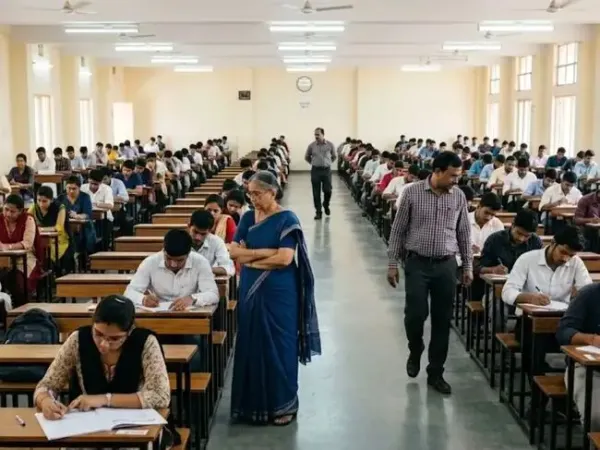
Indian student in US shares exam culture shock, sparks debate over cheating (AI generated image)
An Indian student living in the United States has sparked a social media debate after describing her surprise at finding exam halls where students appeared to follow academic rules despite the absence of invigilators, phone checks and internet jammers. The student said the experience highlighted a cultural difference in how examinations are conducted and how academic honesty is perceived in the US compared with India.
In a post on X, formerly Twitter, the student said she had been in the US for two months and was struck by the level of trust she observed during examinations. Her account drew responses from social media users, with some agreeing that academic environments in the US can be less restrictive, while others argued that examination practices vary between universities and courses.
"It's been 2 months since I landed in the US, and my biggest cultural shock has been exam ethics. No invigilators, open book, no phone checks or internet jammers, yet no one was on their phone or cheating," the student wrote.
"Cutthroat competition in India just doesn't allow for this kind of trust," she added.
In some US universities and courses, assessments may take the form of open-book examinations, take-home assignments or online tests that do not require continuous in-person supervision. Other examinations are conducted in classrooms with invigilators and strict rules governing the use of phones, internet access and other resources.
Academic integrity policies also vary by institution. Students found guilty of cheating or other forms of academic misconduct may face disciplinary proceedings, with penalties depending on the university's rules and the nature of the violation.
The student's account, however, reflects her experience rather than a uniform practice across American universities. The absence of invigilators in a particular examination does not necessarily mean that all US institutions rely on the same approach to monitoring students.
One user, who said they also attended an American university, cautioned against generalising from a single experience.
"I also go to an American university, and it's not always like this for every class; there are invigilators, and not all tests are open book. You absolutely can't use your phones, and if you're caught, you're done for; I have seen people cheating," the user wrote.
Another user agreed that examinations could be more relaxed in some American institutions but questioned whether competition alone explained the difference.
"While I agree exams are far more relaxed here, it's not in the way you're describing. The actions aren't just because of cutthroat competition, and that competition isn't magically lower in the US," the user commented.
A third user argued that the issue went beyond the presence or absence of invigilators, suggesting that students' attitudes towards cheating and the behaviour of others could influence academic integrity.
"The trust isn't the shock; it's that nobody there sees a reason to cheat. Back home we cheat because everyone else does and the system punishes honesty, not rewards it," the user said.
Another commenter highlighted the potential consequences of academic misconduct in the US, writing, "Ma'am, if you're caught cheating in the US, it is an academic misconduct hearing and a police case next."
A user said studying in Helsinki and travelling to warmer European countries had shaped their perception of differences in honesty and trust. They described Nordic countries as operating more on trust, while saying Italy reminded them of India because of stories they had heard about theft.
A fifth commenter compared Himachal Pradesh with the plains of Haryana, suggesting that people in the former appeared less cunning. However, the user acknowledged that these were generalisations made while observing trends and stressed that crime and cheating exist everywhere.
Another user argued that the tendency to seek shortcuts was a major factor behind cheating.
"Agreed. But the primary reason for copying is the growing penchant for shortcuts. We, Indians, are always in a hurry and lack faith in methods. 'Do it by hook or crook' is the mantra," the user wrote.
The discussion reflects differing views on academic honesty, competition and institutional trust. While the student's account has prompted comparisons between India and the US, the responses also underline that examination rules and student behaviour can vary considerably across institutions and individuals.
In a post on X, formerly Twitter, the student said she had been in the US for two months and was struck by the level of trust she observed during examinations. Her account drew responses from social media users, with some agreeing that academic environments in the US can be less restrictive, while others argued that examination practices vary between universities and courses.
"It's been 2 months since I landed in the US, and my biggest cultural shock has been exam ethics. No invigilators, open book, no phone checks or internet jammers, yet no one was on their phone or cheating," the student wrote.
"Cutthroat competition in India just doesn't allow for this kind of trust," she added.
Also Read: Kim Jong-un death rumours: North Korean leader seen at expo after claims of his death, sister taking over power
How exam rules differ across US universities
The student's experience has drawn attention to differences in examination practices, including the use of invigilators, restrictions on electronic devices and the role of academic integrity policies.In some US universities and courses, assessments may take the form of open-book examinations, take-home assignments or online tests that do not require continuous in-person supervision. Other examinations are conducted in classrooms with invigilators and strict rules governing the use of phones, internet access and other resources.
Academic integrity policies also vary by institution. Students found guilty of cheating or other forms of academic misconduct may face disciplinary proceedings, with penalties depending on the university's rules and the nature of the violation.
The student's account, however, reflects her experience rather than a uniform practice across American universities. The absence of invigilators in a particular examination does not necessarily mean that all US institutions rely on the same approach to monitoring students.
Social media users debate trust and cheating
The post prompted a range of reactions, with users discussing whether the apparent difference in examination practices stems from trust, institutional rules, academic pressure or students' attitudes towards competition.One user, who said they also attended an American university, cautioned against generalising from a single experience.
"I also go to an American university, and it's not always like this for every class; there are invigilators, and not all tests are open book. You absolutely can't use your phones, and if you're caught, you're done for; I have seen people cheating," the user wrote.
Another user agreed that examinations could be more relaxed in some American institutions but questioned whether competition alone explained the difference.
"While I agree exams are far more relaxed here, it's not in the way you're describing. The actions aren't just because of cutthroat competition, and that competition isn't magically lower in the US," the user commented.
A third user argued that the issue went beyond the presence or absence of invigilators, suggesting that students' attitudes towards cheating and the behaviour of others could influence academic integrity.
"The trust isn't the shock; it's that nobody there sees a reason to cheat. Back home we cheat because everyone else does and the system punishes honesty, not rewards it," the user said.
Another commenter highlighted the potential consequences of academic misconduct in the US, writing, "Ma'am, if you're caught cheating in the US, it is an academic misconduct hearing and a police case next."
User compares experiences in Europe and India
The discussion also extended beyond the US, with one user drawing comparisons between experiences in different European countries and parts of India.A user said studying in Helsinki and travelling to warmer European countries had shaped their perception of differences in honesty and trust. They described Nordic countries as operating more on trust, while saying Italy reminded them of India because of stories they had heard about theft.
A fifth commenter compared Himachal Pradesh with the plains of Haryana, suggesting that people in the former appeared less cunning. However, the user acknowledged that these were generalisations made while observing trends and stressed that crime and cheating exist everywhere.
Another user argued that the tendency to seek shortcuts was a major factor behind cheating.
"Agreed. But the primary reason for copying is the growing penchant for shortcuts. We, Indians, are always in a hurry and lack faith in methods. 'Do it by hook or crook' is the mantra," the user wrote.
The discussion reflects differing views on academic honesty, competition and institutional trust. While the student's account has prompted comparisons between India and the US, the responses also underline that examination rules and student behaviour can vary considerably across institutions and individuals.