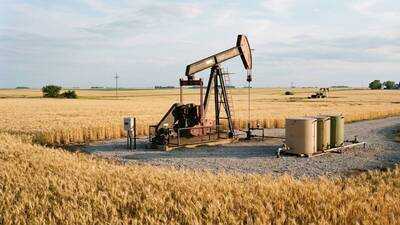
In 2012, horizontal drilling triggered a rush to lease mineral rights beneath farmland in southern Kansas. Oil companies sought access to the Mississippian limestone formation, offering landowners upfront payments for drilling rights and royalties if wells produced. Retired Sumner County farmer Karl Willey was among those who signed leases covering hundreds of acres. The boom brought substantial sums to some landowners, even before the full production potential of their properties was known.
Advances in horizontal drilling and hydraulic fracturing helped open the Mississippian limestone play , which extends from north central Oklahoma into south central Kansas. By October 2012, Kansas had 113 horizontal wells in the play, compared with about 2,000 horizontal wells in North Dakota's Bakken by mid 2012, according to the . The development attracted landmen who searched county records to identify mineral rights owners and negotiate leases.
A lease on wheat fields
ABC News reported in May 2012 that Willey had signed leases covering hundreds of acres of wheat fields, bringing him more than $2 million in lease income. His well was among the first in Sumner County, and he showed reporters a recent royalty check worth more than $20,000. The report did not specify the period covered by that check, so it cannot be described as monthly income. The same ABC News report quoted Kansas landman Fred Hambright, who said lease offers had risen from $15 to $20 an acre six months earlier to as much as $1,700 an acre. Hambright also said the largest check he had written was $900,000, referring to his own leasing activity rather than a royalty payment received by Willey.
How lease money works
An oil and gas lease can include an upfront bonus for granting an operator the right to develop specified acreage and a royalty if a well produces. A royalty is a contracted share of the value of oil and gas sold, not the total revenue from the well. Bonus amounts and royalty rates vary by agreement, so terms reported for one property should not be assumed to apply to another.
Mineral rights can be separate from surface ownership, allowing farmers to continue cultivating much of a field while operators use the area needed for well pads and access roads. The play became a major target for horizontal drilling across southern Kansas, including Harper and Sumner counties. That development brought mineral rights on farmland into greater demand. 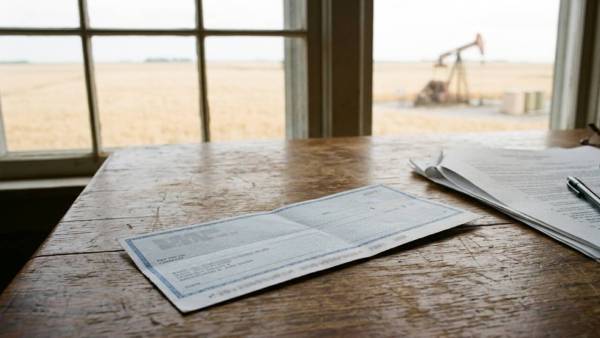
The other side of the boom
Horizontal wells in the Mississippian produce water along with oil, and operators must manage the wastewater. A 2018 study by Justin L. Rubinstein, William L. Ellsworth and Sara L. Dougherty, published in the Bulletin of the Seismological Society of America, analysed earthquakes in Harper and Sumner counties from 2013 to 2016. The researchers concluded that deep injection of wastewater from oil and gas production was the probable cause of the increase in seismic activity. They did not find the same relationship between the earthquakes and hydraulic fracturing or oil production itself.
A Stanford University studied the Harper and Sumner County earthquakes from 2013 to 2016 and classified them as induced, noting that greater wastewater injection has been associated with an increased likelihood of producing earthquakes. Willey's experience shows how new drilling technology changed the value of farmland in southern Kansas. He reportedly received more than $2 million from leasing acreage and showed reporters a royalty check worth more than $20,000, although the report did not specify the period covered by that payment. The boom brought substantial opportunities to landowners, while wastewater disposal and the resulting seismic activity raised environmental concerns across the region.
Contact to : xlf550402@gmail.com
Copyright © boyuanhulian 2020 - 2023. All Right Reserved.