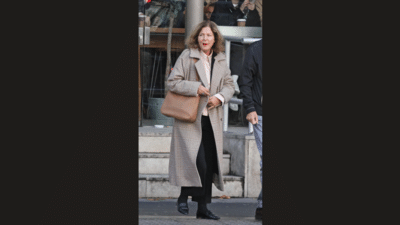
A daughter who was excluded from her mother's £1.1 million estate over allegations that she failed to show enough 'love and respect' has lost her legal battle against her brother. Dervishe Halil, who died aged 94 in 2021, left her entire fortune to her eldest son, Dogan Halil , after changing her will several times following a bitter family dispute. Her daughter, Aysel Gencay, challenged the 2018 will, claiming her brother had influenced their mother into disinheriting her. However, a judge rejected the allegations, finding no evidence of undue influence and ruling that the final will was valid, leaving the entire estate to Dogan.
What led to the £1.1 million inheritance dispute between siblings
According to The Sun, Dervishe Halil moved to London from Cyprus with her husband in 1952. She died in 2021 at the age of 94, leaving behind an estate valued at £1.1 million.
Initially, her fortune was intended to be divided among all her children. However, following a disagreement between her eldest son, Dogan, and her daughter, Aysel, Dervishe changed her estate plans. Over four years, she made several separate wills, eventually deciding to leave everything to Dogan, who was 74 at the time of the court proceedings.
The family dispute centred on allegations made by Aysel that her brother had taken possession of part of the family's property for his own benefit. She accused him of 'slicing off' a section of the property, an allegation that subsequently became a significant part of the inheritance dispute.
Why did a mother threaten to disinherit her daughter over a family feud
The conflict escalated in 2015 when Aysel received a handwritten letter from her mother. The letter warned that she could be excluded from the will unless she apologised, reconciled with Dogan and demonstrated greater affection and respect towards her mother.
In the letter, Dervishe criticised Aysel and her other son, Attila, over their treatment of Dogan. She wrote: "Your actions have destroyed my life and home; your actions towards your brother Dogan are very bad and shameful – we saw nothing but goodness from Dogan to all of us."
Three years later, Dervishe acted on her warning and excluded Aysel and Attila from her will. In a side letter accompanying the new arrangements, she explained that neither child had fulfilled the conditions she had previously set out. According to The Sun, Dervishe wrote: "Aysel and Attila: None of the conditions in the letter I sent three years ago were fulfilled."
She continued: "Unfortunately, nothing has changed. "You still do not talk to your brother Dogan, and you still do not show me love and respect. You destroyed my home, and I deleted you from my will."
Her final will, made in 2018, left the entire estate to Dogan. The decision prompted Aysel to bring legal proceedings against her brother, who was responsible for administering the estate.
Why did a daughter challenge her mother's £1.1 million will in court
Aysel challenged the 2018 will at Central London County Court, alleging that Dogan had influenced their mother and turned her against her. She argued that he had pressured Dervishe into changing her inheritance arrangements and preventing her from receiving a share of the estate.
Her legal team argued that the will should be declared invalid because Dervishe either did not properly understand or approve its contents or had been subjected to undue influence. They also raised allegations of fraudulent calumny against Dogan.
Aysel's barrister, Peter John, argued that her mother's previous approach to inheritance had been based on treating her children equally. He told the court:
"The deceased had always indicated that she would deal with her estate based on equality – informed by her cultural and religious background and her consistent approach towards her children throughout their lives."
He also argued that the final will was inconsistent with the relationship Aysel had enjoyed with her mother.
"The deceased’s purported last will – the 2018 will – was, therefore, a shock to the claimant as the deceased’s only daughter, completely at odds with these statements, and also inconsistent with the relationship which she enjoyed with the deceased throughout her life."
What evidence did a daughter present in her £1.1 million inheritance dispute
Aysel's lawyers also questioned the two handwritten letters, arguing that Dervishe would not have been able to compose them without significant assistance. They pointed to similarities between the language used in the letters and the language used by Dogan.
Aysel, who lives in Turkey, maintained that she had remained close to her mother. Giving evidence, she told the court that she regularly travelled from Istanbul to visit Dervishe during her final years. "I remained extremely close to my mother all my life," she said.
Her brother Attila was also involved in the proceedings as a co-defendant, alongside Dogan's wife, Susan, who was a fellow executor. Attila had received a one-third share of the estate through a deed of variation made by Dogan and Susan.
Why did a judge reject a daughter's £1.1 million inheritance claim
After considering the evidence, Judge Mark Raeside KC ruled in Dogan's favour, rejecting Aysel's allegations of dishonesty and undue influence. The judge described Dogan as a 'dutiful son' who had done his best for his ageing mother. He also found that Dogan had no involvement in preparing the 2018 will or the accompanying side letters.
Judge Raeside said: "I reject the assertion that the deceased had any assistance from Dogan with her will. The evidence makes clear he was simply a dutiful son.
"Both side letters were written in Turkish in the deceased’s hand, Dogan did not help her and had nothing whatever to do with them."
The judge also rejected Aysel's allegations that Dogan had acted dishonestly in relation to the family's property and finances. He said her belief that her brother had taken part of the basement property in Packington Street, Islington, had influenced her view of him over the years.
Why did a court uphold a mother's £1.1 million will in favour of her son
The court heard that Dervishe had attended her solicitor independently when preparing her will. Her solicitor recorded that she appeared mentally sharp and understood what she was doing. When asked why she wanted to exclude her other children, Dervishe reportedly said they were 'not visiting her and not showing any interest'.
The judge also rejected the argument that Dervishe lacked testamentary capacity . Although she displayed symptoms of dementia by 2020, he found that she was of sound mind when she made her final will in 2018.
In dismissing the case, Judge Raeside said: "Aysel was wrong in her approach. She became fixated on this matter, and her conduct was fundamentally wrong. She raised these matters quite wrongly."
He added: "There was no dishonesty by Dogan. Dogan wasn’t responsible for any suspicion, and therefore the case should be dismissed."
The judge further stated that Dogan had correctly accounted for the relevant finances and that the allegations against him were misplaced. The court ultimately dismissed Aysel's claims and ruled that Dervishe's 2018 will was valid, leaving her £1.1 million estate to Dogan.
Contact to : xlf550402@gmail.com
Copyright © boyuanhulian 2020 - 2023. All Right Reserved.